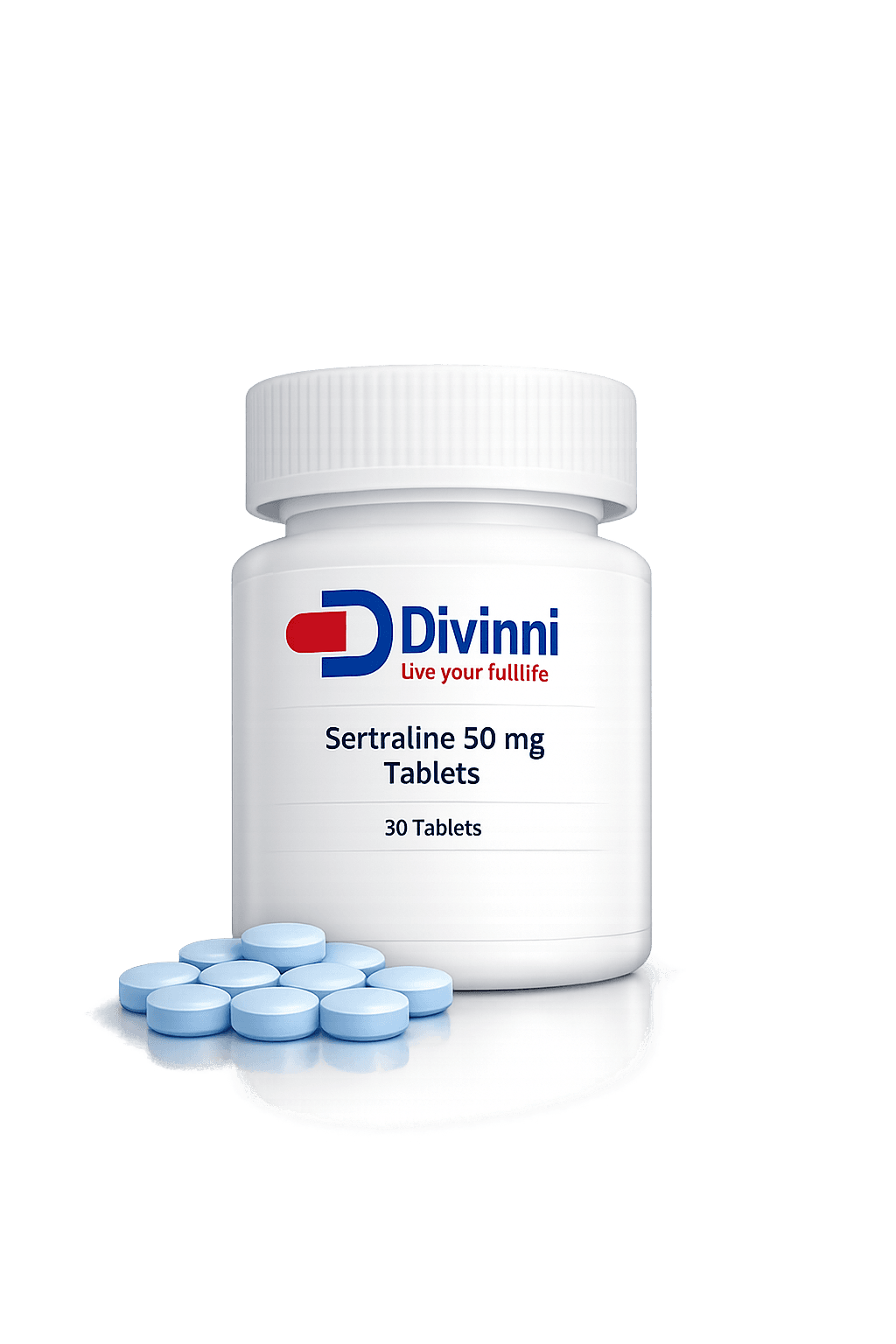
Premature ejaculation (PE) is one of the most common male sexual dysfunctions, affecting approximately 4% of the male population worldwide. While several treatment options exist, selective serotonin reuptake inhibitors (SSRIs) have emerged as a cornerstone of pharmacologic therapy.
Among these, sertraline has demonstrated significant efficacy in delaying ejaculation, though its use for this indication remains off-label in most countries. This article provides a comprehensive, evidence-based review of sertraline's role in treating premature ejaculation.
Understanding Premature Ejaculation
The International Society for Sexual Medicine defines PE by three core criteria: ejaculation that always or nearly always occurs within approximately 1 minute of vaginal penetration (lifelong PE) or a clinically significant reduction to about 3 minutes or less (acquired PE); inability to delay ejaculation on all or nearly all vaginal penetrations; and negative personal consequences such as distress, bother, frustration, or avoidance of sexual intimacy.
The neurobiological basis of PE involves serotonin (5-HT) signaling. Research suggests that men with lifelong PE may have reduced central serotonin neurotransmission, leading to diminished ejaculatory control. This understanding forms the pharmacologic rationale for using SSRIs in PE treatment.
Mechanism of Action: How Sertraline Delays Ejaculation
Sertraline is a highly selective serotonin reuptake inhibitor that blocks the reuptake of serotonin at the synaptic cleft. This action increases extracellular serotonin levels, enhancing activation of postsynaptic receptors in the central nervous system. The elevated serotonin activity in the hypothalamus and spinal cord exerts an inhibitory effect on the ejaculatory reflex, thereby prolonging the time to ejaculation.
A 2019 systematic review and meta-analysis published in Medicine confirmed that sertraline significantly prolongs intravaginal ejaculatory latency time (IELT) in PE patients, with a standard mean difference of 2.14 (95% CI 1.20 to 3.08) — a clinically meaningful delay in ejaculation.
Efficacy Data: What the Clinical Evidence Shows
The most comprehensive evidence comes from a 2019 meta-analysis that included 12 randomized controlled trials and 2 randomized crossover trials, encompassing 977 patients with PE.
2019 Meta-Analysis: Key Outcome Measures
| Outcome Measure | Effect Size (SMD) | 95% Confidence Interval |
|---|---|---|
| IELT prolongation | 2.14 | 1.20 – 3.08 |
| Patient sexual satisfaction | 2.20 | 1.57 – 2.84 |
| Partner sexual satisfaction | 2.27 | 1.44 – 3.09 |
Duration of Treatment
Subgroup analysis revealed that treatment at various durations all produced significant IELT prolongation. The most substantial effect was observed at the 4-week mark, though benefits persisted with continued treatment.
A 2015 randomized study comparing sertraline to dapoxetine reported baseline IELT increases from 0.84 minutes to 2.71 minutes after one month of daily sertraline 50mg — a nearly 3.2-fold increase. A 2020 melatonin study reported IELT improvements from 48 seconds to approximately 101 seconds following six weeks of sertraline 50mg daily, and found that sertraline significantly increased plasma melatonin levels in PE patients (from 5.49 pg/mL to 10.6 pg/mL).
- 4 weeks: SMD 2.66 (95% CI 1.06 – 4.26)
- 6 weeks: SMD 0.95 (95% CI 0.31 – 1.58)
- 8 weeks: SMD 1.81 (95% CI 0.78 – 2.85)
Dosing Strategies: Daily vs. On-Demand
Daily dosing is the most studied and generally more effective approach. Standard protocols use 50mg daily, though doses may range from 25mg to 100mg depending on response and tolerability.
On-demand dosing involves taking sertraline approximately 4 hours before anticipated sexual activity. A randomized trial comparing daily (50mg every 12 hours) versus on-demand (50mg taken 4 hours before intercourse) found that while both regimens significantly increased IELT, the daily use group demonstrated significantly greater improvement at both 4 weeks (p = 0.036) and 8 weeks (p = 0.009) — approximately 33% longer ejaculatory delay at the 8-week mark.
Daily vs. On-Demand Sertraline: IELT Over Time (seconds)
| Time Point | On-Demand IELT | Daily Use IELT |
|---|---|---|
| Baseline | 101.62 ± 65.44 | 102.50 ± 81.22 |
| 4 weeks | 208.75 ± 128.02 | 276.87 ± 181.08 |
| 8 weeks | 265.87 ± 145.70 | 353.75 ± 176.45 |
Comparative Effectiveness Among SSRIs
A head-to-head randomized trial comparing sertraline (50mg), fluoxetine (20mg), paroxetine (20mg), and citalopram (20mg) administered daily for 8 weeks found sertraline and paroxetine demonstrated comparable efficacy, both producing approximately 5.4-fold increases in IELT from baseline. All SSRIs were effective and generally well-tolerated.
8-Week IELT Improvements by SSRI
| Medication | Baseline IELT (seconds) | 8-Week IELT (seconds) |
|---|---|---|
| Sertraline | 69.4 ± 54.3 | 376.3 ± 143.5 |
| Paroxetine | 71.5 ± 69.1 | 379.9 ± 154.3 |
| Fluoxetine | 75.5 ± 64.3 | 314.8 ± 190.4 |
| Citalopram | 90.4 ± 79.3 | 282.5 ± 171.1 |
Comparison to Dapoxetine: The Approved Alternative
Dapoxetine is the only pharmacologic agent approved specifically for PE treatment in several countries, though it has not received FDA approval in the United States. A 2015 randomized study directly compared dapoxetine (30mg on-demand) to sertraline (50mg daily for one month). Both treatments produced nearly identical improvements in ejaculatory control — though dapoxetine offers on-demand dosing and a more favorable tolerability profile for certain side effects.
Sertraline vs. Dapoxetine: Efficacy and Side Effects
| Measure | Dapoxetine | Sertraline |
|---|---|---|
| Baseline IELT | 0.87 min | 0.84 min |
| Post-treatment IELT | 2.84 min | 2.71 min |
| "Much better or better" CGIC rating | 36.5% | 37.5% |
| Fatigue | 3.2% | 18.8% |
| Somnolence | 1.6% | 15.6% |
| Dry mouth | 0% | 12.5% |
| Dizziness | 12.5% | 9.5% |
| Nausea | 9.4% | 6.3% |
Safety and Adverse Effects
Sertraline is generally well-tolerated in PE treatment, though side effects do occur. The 2019 meta-analysis identified a significant increased risk of gastrointestinal upset (risk ratio = 2.71, 95% CI 1.39 to 5.28).
The randomized trial comparing daily versus on-demand dosing found side effects were significantly higher in the daily use group (26.7%) compared to the on-demand group (20%) (p < 0.05). Drowsiness, diarrhea, and vertigo were significantly more common with daily administration.
A 2025 study in combat-injured patients found sertraline and paroxetine appeared relatively balanced with moderate efficacy and relatively few side effects.
- Gastrointestinal: nausea, diarrhea, dyspepsia, loss of appetite.
- Neurologic: drowsiness (15.6% with daily dosing), dizziness (9.5%), headache (3.2%).
- General: fatigue (18.8% with daily dosing), dry mouth (12.5%), increased sweating.
- Sexual: decreased libido, erectile dysfunction — paradoxically possible despite PE treatment.
Special Populations and Clinical Considerations
For patients with co-occurring depression or anxiety, sertraline offers the advantage of treating both conditions simultaneously. A 2025 study noted sertraline objectively reduced reactive and personal anxiety symptoms on the Spielberger-Hanan scale.
A Cochrane review included sertraline for secondary PE following stroke, showing significant IELT improvement (mean difference 2.00, 95% CI 1.78 to 2.22) and substantial partner satisfaction gains. For patients who do not respond to one SSRI, other SSRIs may be used as salvage therapy.
Clinical Recommendations
Based on the available evidence, treatment should be individualized between clinician and patient.
- Where available, dapoxetine (on-demand, approved indication) is preferred for patients who can access it, particularly those concerned about daily medication or chronic side effects.
- Daily sertraline (50mg) is an effective off-label alternative with robust evidence. Starting at 25mg and titrating to 50mg may improve tolerability.
- On-demand sertraline (50mg taken 4 hours before intercourse) is less effective than daily dosing but offers greater flexibility and fewer side effects.
- Assess IELT and patient/partner satisfaction at 4-week intervals; monitor for gastrointestinal symptoms, somnolence, and emerging sexual side effects.
- Consider alternative SSRIs (paroxetine, fluoxetine, citalopram) if response is inadequate after 8 weeks.
- Sertraline use for PE remains off-label in most countries, including the United States. Concomitant use with MAOIs is contraindicated.
Conclusion
Sertraline is an effective, well-tolerated treatment for premature ejaculation, capable of increasing IELT by approximately 2- to 5-fold depending on dosing regimen and treatment duration. Daily dosing at 50mg produces superior results compared to on-demand administration, though with a higher side effect burden.
While dapoxetine remains the only approved on-demand agent in several countries, sertraline represents a valuable off-label alternative, particularly for patients with coexisting depression or anxiety. The choice between daily and on-demand dosing should be individualized based on patient preference, frequency of sexual activity, side effect tolerance, and treatment goals.
As with all pharmacologic interventions for sexual dysfunction, treatment decisions should be made collaboratively between clinician and patient, with careful attention to the balance between efficacy and tolerability.
Sources
- Sertraline compared with placebo for secondary premature ejaculation after stroke. Cochrane Database of Systematic Reviews.
- Improvement in Selective Serotonin Reuptake Inhibitor-Associated Sexual Dysfunction With Buspirone. Cureus. 2024.
- Efficacy and tolerability of dapoxetine and sertraline for the treatment of Chinese patients with premature ejaculation. Journal of Urology. 2016.
- Sertraline for premature ejaculation: a systematic review and meta-analysis. PROSPERO. 2024.
- Effectiveness of treatment of sexual dysfunction in men with premature ejaculation, injured as a result of hostilities. 2026.
- Comparative study of on-demand and daily use of sertraline in treatment of premature ejaculation: A randomized clinical trial. CORE.
- The effect of plasma melatonin levels in the treatment of lifelong premature ejaculation with selective serotonin reuptake inhibitors. Andrologia. 2020.
- Efficacy and safety of sertraline for the treatment of premature ejaculation: Systematic review and meta-analysis. Medicine. 2019.