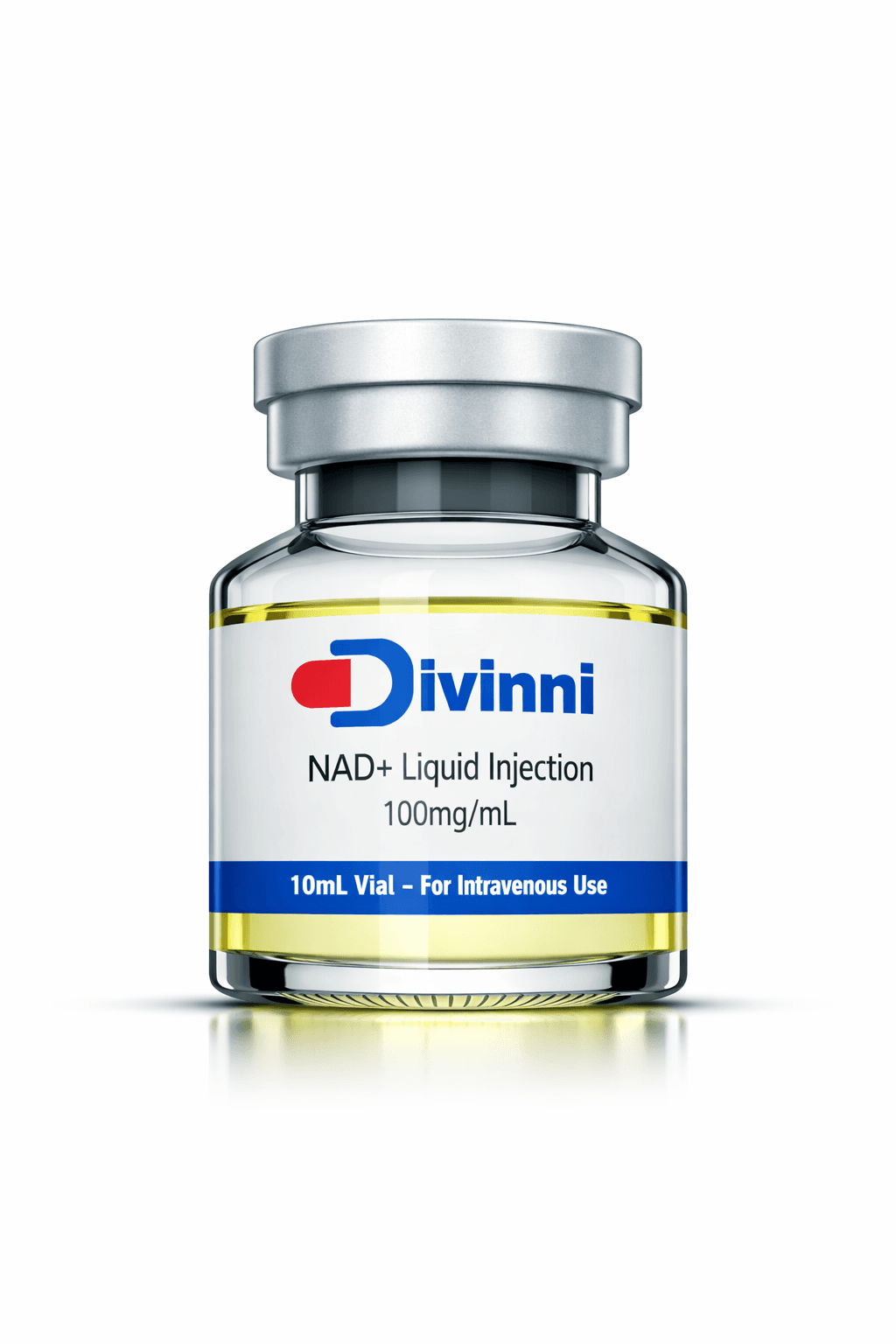
NAD stands for Nicotinamide Adenine Dinucleotide. It is a naturally occurring coenzyme found throughout the body. NAD+ plays an important role in cellular energy production, mitochondrial function, DNA repair, and overall cellular health. It is essential for life and is involved in hundreds of metabolic reactions.
As we age, NAD+ levels naturally decline. This decline is associated with various aspects of the aging process, including reduced mitochondrial function, impaired DNA repair, and decreased cellular energy production. This is why NAD+ has become a popular topic in wellness and longevity conversations.
Scientific Background
NAD stands for Nicotinamide Adenine Dinucleotide. It is a naturally occurring coenzyme found throughout the body. NAD+ plays an important role in cellular energy production, mitochondrial function, DNA repair, and overall cellular health. It is essential for life and is involved in hundreds of metabolic reactions.
Why NAD+ Levels Decline with Age
As we age, NAD+ levels naturally decline. This decline is associated with various aspects of the aging process, including reduced mitochondrial function, impaired DNA repair, and decreased cellular energy production. This is why NAD+ has become a popular topic in wellness and longevity conversations.
Health and Wellness Benefits
- NAD+ may support:
- Mitochondrial efficiency: Helping cells produce energy more effectively
- Mental clarity: Supporting cognitive function
- Sleep quality: Potentially improving sleep patterns
- Energy levels: Enhancing overall vitality
- Overall cellular health: Supporting fundamental cellular processes
Clinical Applications
NAD+ is typically administered via IV infusion, which allows for direct delivery into the bloodstream. Infusions generally require up to 4 hours for administration. While effective, direct NAD+ infusions can sometimes cause side effects including chest tightness, flushing, headaches, and increased heart rate.
Longevity Implications
The connection between NAD+ and longevity is an active area of research. By supporting mitochondrial function and DNA repair—two key processes that decline with age—NAD+ supplementation may help address fundamental aspects of the aging process. Many patients and healthcare providers explore NAD+ as part of broader wellness and healthy aging routines.
Comparison with Niagen
- While NAD+ is the active molecule cells use directly, Niagen (nicotinamide riboside) is a precursor that helps the body produce its own NAD+. The key differences include:
- Infusion time: NAD+ requires up to 4 hours; Niagen requires approximately 1 hour
- Side effects: NAD+ may cause flushing, chest tightness, headache, and increased heart rate; Niagen is generally better tolerated