MICC is prescribed exclusively as part of comprehensive, medically supervised weight management programs. It is intended to support the body's ability to convert fats and sugars into energy and may contribute to improved metabolic efficiency. Some individuals use MICC to assist with energy production and muscle recovery as part of a weight management plan.
From a longevity standpoint, maintaining healthy liver function is critical. Hepatic steatosis (fatty liver) is an independent risk factor for cardiovascular disease, type 2 diabetes, and overall mortality. By supporting liver fat metabolism, MICC may indirectly influence these longevity-related outcomes. However, no direct evidence links MICC use to extended lifespan in metabolically healthy individuals, and it is intended as part of a comprehensive program including diet and exercise.
Scientific Background
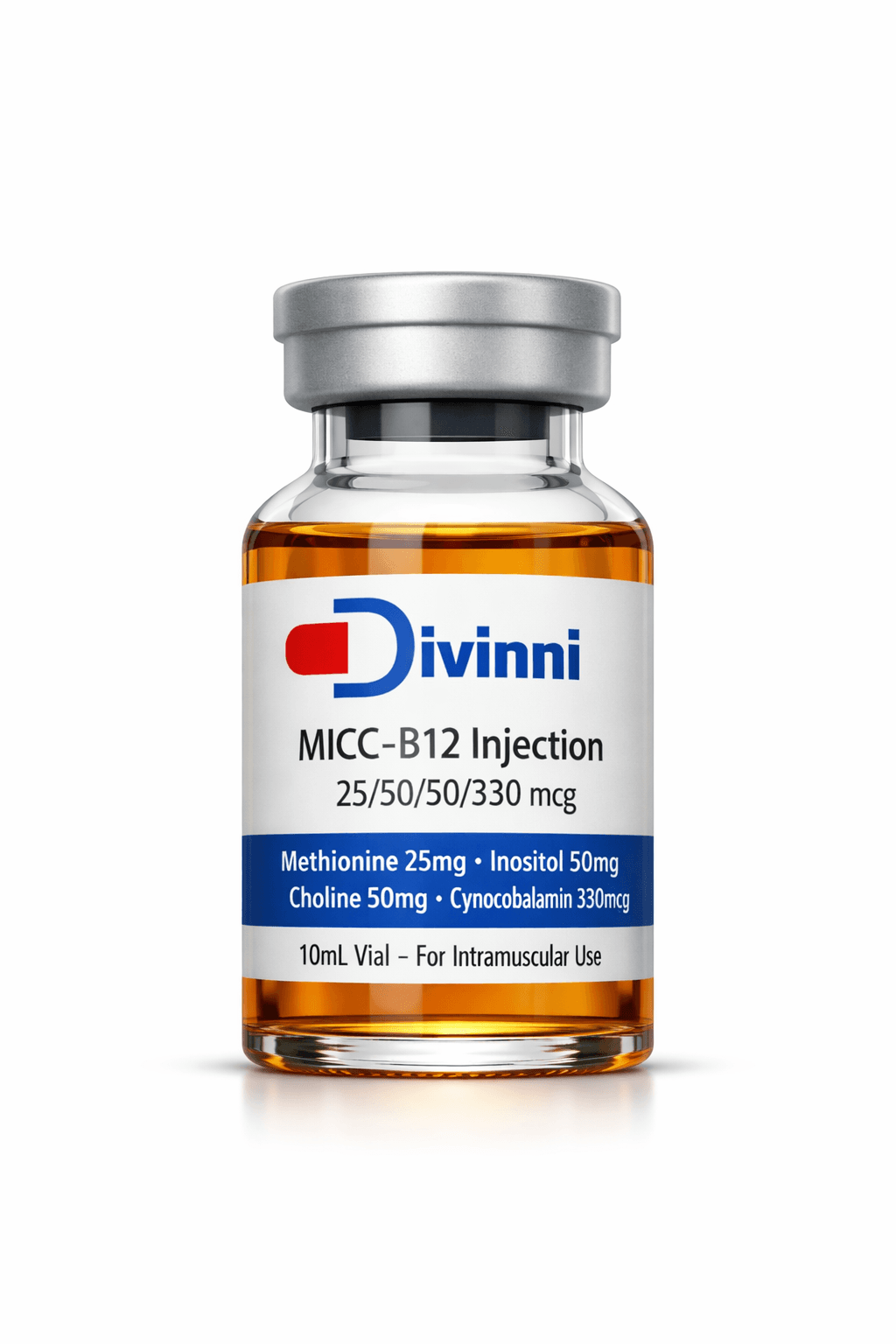
- MICC is a lipotropic injection—a blend of nutrients designed to prevent or reduce excess fat accumulation, particularly in the liver. The term "lipotropic" refers to agents that promote the export of fat from the liver and the breakdown of fat within the body. The MICC formula combines four key nutrients: Methionine, Inositol, Choline, and Cyanocobalamin.
Composition
- Each milliliter of MICC contains:
- Methionine: 25mg
- Inositol: 50mg
- Choline: 50mg
- Cyanocobalamin (B12): 0.33mg
Mechanism of Action
- Methionine: An essential sulfur-containing amino acid that serves as a methyl donor in numerous metabolic pathways. It plays a role in methylation-related processes that help regulate antioxidant defense and metabolic function. Methionine helps break down sugars and carbohydrates, converting them into energy. It is also a precursor to glutathione, the body's master antioxidant.
- Inositol: A carbocyclic sugar formerly classified as vitamin B8 that functions as a second messenger in insulin signaling pathways. Inositol may influence fat metabolism and cellular function, helping to boost energy production from food.
- Choline: An essential nutrient critical for liver function, normal brain development, nerve function, and muscle movement. It plays a role in supporting the conversion of fat into energy and may aid in muscle recovery, helping physical performance.
- Cyanocobalamin (Vitamin B12): Helps the body convert carbohydrates into usable energy.
Primary Uses
MICC is prescribed exclusively as part of comprehensive, medically supervised weight management programs. It is intended to support the body's ability to convert fats and sugars into energy and may contribute to improved metabolic efficiency. Some individuals use MICC to assist with energy production and muscle recovery as part of a weight management plan.
Health and Wellness Benefits
- Fat Metabolism: The synergistic action of methionine, inositol, and choline targets the efficient breakdown of fats. These nutrients work together to support the body's natural fat-burning processes.
- Energy Production: By supporting the conversion of fats and carbohydrates into usable energy, MICC may help improve energy levels, particularly during calorie-restricted weight loss programs where fatigue is common.
- Muscle Recovery: Choline's role in muscle function may help reduce recovery time after exercise, benefiting those engaged in regular physical activity as part of weight management.
- Metabolic Efficiency: The combination of these lipotropic agents may encourage more efficient metabolic processes, potentially helping the body utilize nutrients more effectively.
Longevity Perspective
From a longevity standpoint, maintaining healthy liver function is critical. Hepatic steatosis (fatty liver) is an independent risk factor for cardiovascular disease, type 2 diabetes, and overall mortality. By supporting liver fat metabolism, MICC may indirectly influence these longevity-related outcomes. However, no direct evidence links MICC use to extended lifespan in metabolically healthy individuals, and it is intended as part of a comprehensive program including diet and exercise.
Safety Considerations
As a compounded preparation, dosing must be determined by a licensed physician. The water-soluble nature of these compounds generally results in a favorable safety profile. MICC is formulated for IM or Sub-Q administration under medical supervision.