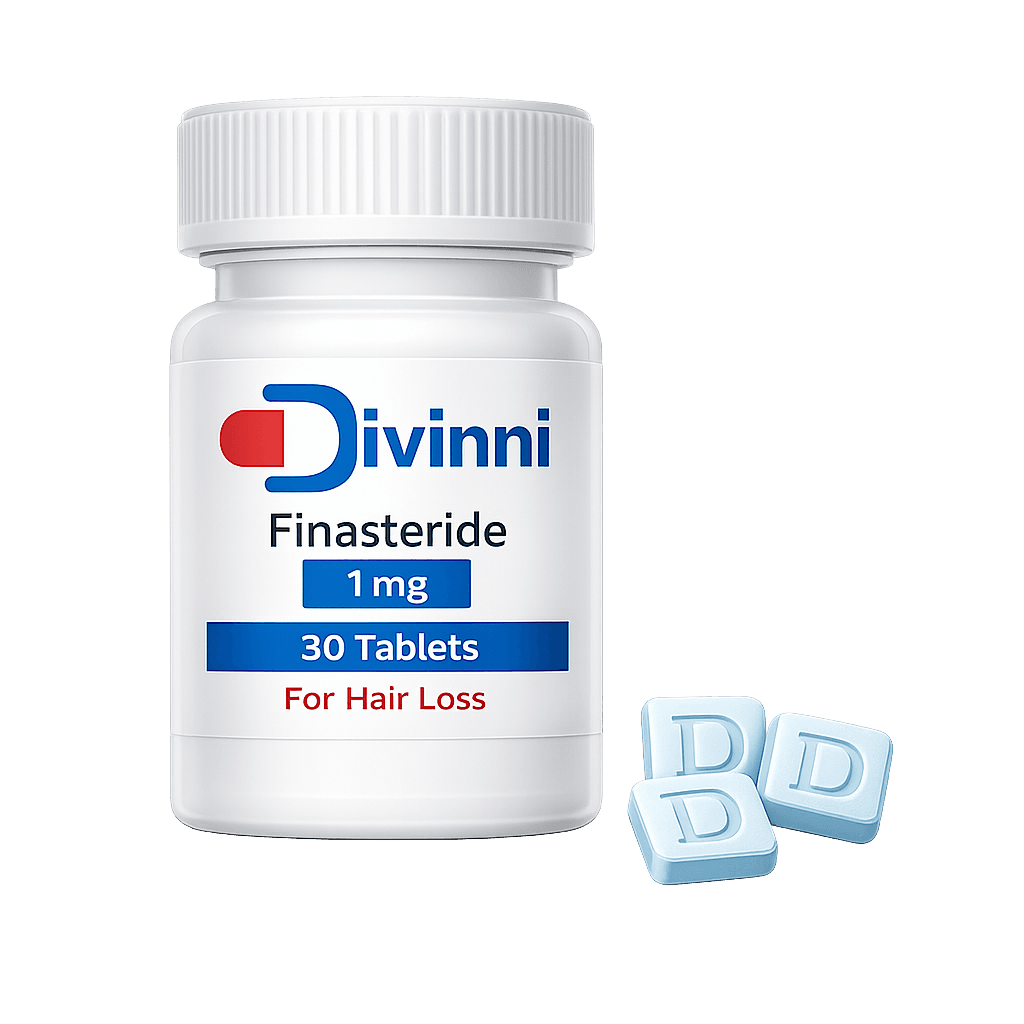
Finasteride is a selective 5α-reductase inhibitor that has been FDA-approved for the treatment of androgenic alopecia (male pattern hair loss) since 1997. The medication works by selectively inhibiting the type II isoenzyme of 5α-reductase, which is responsible for converting testosterone into its more potent metabolite, dihydrotestosterone (DHT) .
DHT is the primary hormonal driver of androgenic alopecia. In genetically susceptible individuals, DHT binds to androgen receptors in dermal papilla cells of scalp hair follicles, triggering a process called follicular miniaturization. Over successive hair cycles, this leads to progressively thinner, shorter, and less pigmented hairs until follicles eventually cease producing visible terminal hair. Finasteride interrupts this process by reducing scalp DHT levels, allowing follicles to recover and produce thicker, longer hairs.
Scientific Background
Finasteride is a selective 5α-reductase inhibitor that has been FDA-approved for the treatment of androgenic alopecia (male pattern hair loss) since 1997. The medication works by selectively inhibiting the type II isoenzyme of 5α-reductase, which is responsible for converting testosterone into its more potent metabolite, dihydrotestosterone (DHT) .
DHT is the primary hormonal driver of androgenic alopecia. In genetically susceptible individuals, DHT binds to androgen receptors in dermal papilla cells of scalp hair follicles, triggering a process called follicular miniaturization. Over successive hair cycles, this leads to progressively thinner, shorter, and less pigmented hairs until follicles eventually cease producing visible terminal hair. Finasteride interrupts this process by reducing scalp DHT levels, allowing follicles to recover and produce thicker, longer hairs.
The standard FDA-approved dose for hair loss is 1 mg orally once daily . At this dose, finasteride reduces serum DHT levels by approximately 65-70% and scalp DHT levels by approximately 40-50% .
Efficacy for Hair Loss Treatment
Finasteride is considered the cornerstone of medical therapy for androgenic alopecia, with clinical evidence demonstrating superior efficacy compared to topical minoxidil alone.
Longitudinal studies have documented the contrasting trajectories of hair density between treated and untreated individuals. One investigation reported that untreated men experienced a 26% reduction in hair count over a five-year period. In contrast, men treated with oral finasteride exhibited a 10% increase in hair density within just one year of therapy.
- Clinical Trial Outcomes:
- In clinical practice, the success rates are notable:
- Approximately 88% of men receiving oral finasteride report stabilization of hair loss
Approximately 66% experience visible regrowth of hair
- Comparative studies have reported the following improvement rates after 12 months of consistent treatment:
94.1% of patients receiving both treatments demonstrated clinical improvement
Finasteride does not cure androgenic alopecia. The therapeutic benefits achieved during active treatment are lost upon cessation, and hair typically begins to shed within two weeks of stopping finasteride. Within one year of discontinuation, most regrown hair is lost, returning the patient to their pre-treatment baseline.
- Time Course of Response:
- Results are not immediate. Patients should expect:
- 2-4 months: Initial effects may begin to be noticeable
- 6-12 months: More substantial results typically become apparent
- 12-24 months: Maximum benefit is usually achieved
- Duration of Treatment:
Health and Wellness Considerations
Finasteride's primary effects are localized to the hair follicle and prostate. The medication does not have direct effects on cardiovascular health, metabolic function, or systemic inflammation. However, the psychological benefits of successful hair loss treatment—improved self-esteem, reduced anxiety about appearance, and better quality of life—are well-documented and contribute to overall wellness .
By reducing DHT levels, finasteride shifts the androgen balance toward higher testosterone relative to DHT. This has no established health benefits or risks beyond the intended effects on hair and prostate.
- Cardiometabolic Health:
- Hormonal Effects:
- Sexual Function Considerations:
- While most men tolerate finasteride well, sexual side effects have been reported. Clinical data indicate these effects are infrequent and typically reversible upon discontinuation . Reported effects may include:
Reduced ejaculate volume
A small percentage of men have reported persistent sexual side effects after discontinuing the medication, a condition sometimes referred to as "post-finasteride syndrome" . The existence and prevalence of this syndrome remain topics of ongoing research and debate in the medical literature.
Breast tenderness or enlargement has been reported in a small number of finasteride users .
- Gynecomastia:
Topical Finasteride Formulations
Topical finasteride has been developed as an alternative to oral administration, with the goal of providing similar scalp DHT reduction while minimizing systemic absorption and associated side effects .
A phase III randomized controlled trial involving 458 patients found that topical finasteride significantly improved hair count in the targeted area compared to placebo, with improvement similar to that of oral finasteride . Importantly, the reduction in mean serum DHT concentrations was lower with topical versus oral finasteride (34.5% vs. 55.6%), indicating a lesser chance of sexual side effects related to systemic DHT reduction .
A study of 40 male patients treated with a topical solution of 0.25% finasteride mixed with 3% minoxidil versus 3% minoxidil alone reported superior effects on hair diameter and density with the combination. No systemic adverse events or sexual dysfunction were reported .
- Efficacy of Topical Finasteride:
- Typical Topical Concentrations:
Safety and Contraindications
Pregnancy (finasteride can cause birth defects in male fetuses; women who are or may become pregnant should not handle crushed or broken finasteride tablets)
- Absolute Contraindications:
Known hypersensitivity to finasteride or any component of the formulation
Finasteride can affect PSA (prostate-specific antigen) levels, a screening test for prostate cancer. Clinicians must adjust their interpretation in treated patients
- Precautions:
Baseline prostate cancer screening is recommended prior to initiating therapy
- Side Effect Profile:
- Most common: Sexual dysfunction (infrequent, typically reversible)
- Less common: Gynecomastia, skin rash, testicular pain
- Topical formulations: Contact dermatitis, scalp irritation, erythema
References
Alhabeeb, S., et al. (2025). Pharmacological Role and Clinical Applications of 5α-Reductase Inhibitors. Saudi Journal of Medicine and Public Health, 2(2), 85-94.
- Koralewicz, M.M., & Szatkowska, O.A. (2024). Topical solutions for androgenetic alopecia: evaluating efficacy and safety. Forum Dermatologicum, 10(3), 71-78.
Primary Care Notebook. (2026). Treatment of androgenetic alopecia in men.
Oxford Online Pharmacy. (2024). What is Topical Finasteride and Minoxidil Spray?