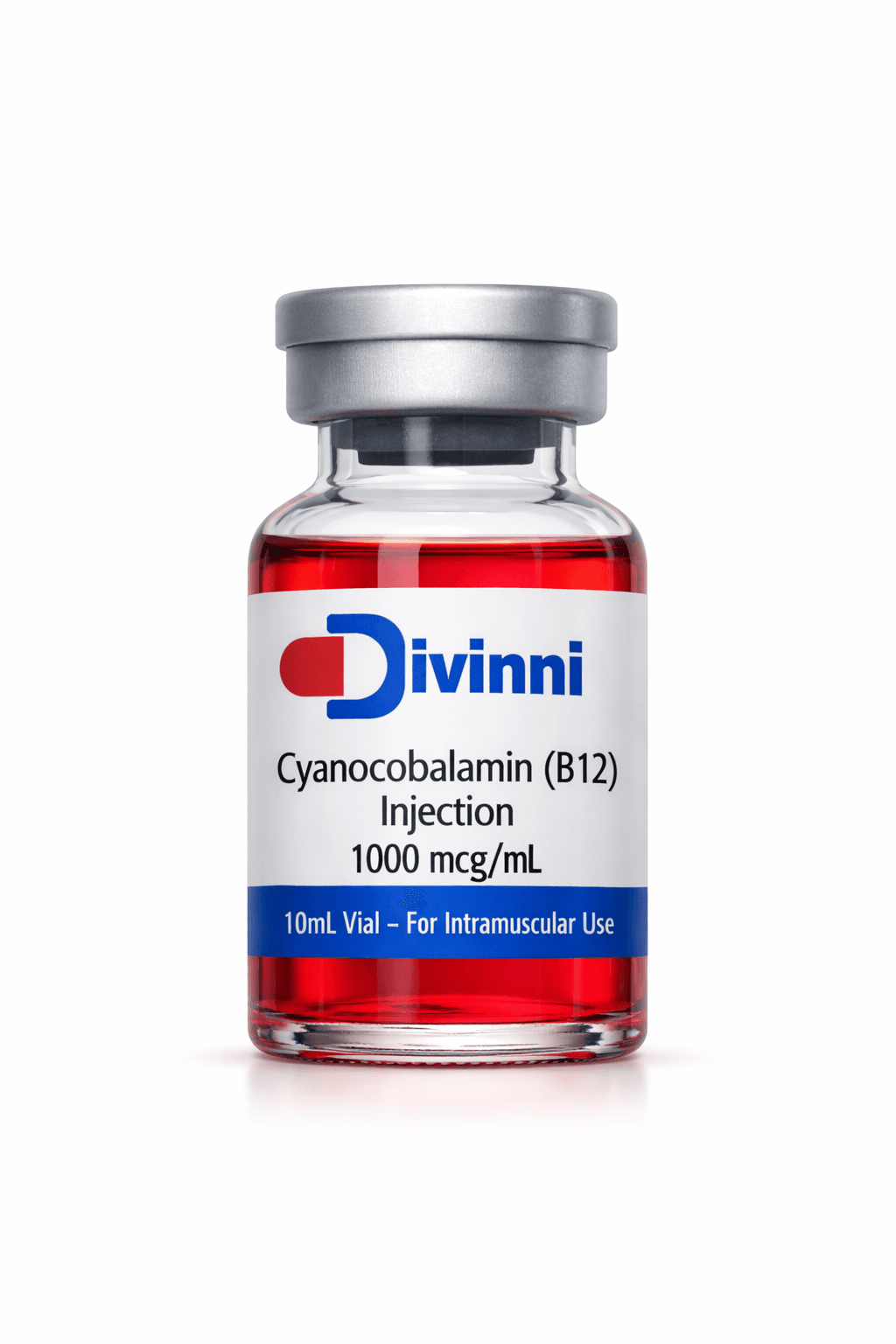
Following intramuscular or subcutaneous injection, cyanocobalamin reaches peak plasma concentration within one hour. The liver serves as the primary storage organ, with excess amounts excreted in urine—50-98% of a 100-1000 mcg dose appears in urine within 48 hours, predominantly during the first eight hours.
Cyanocobalamin is primarily prescribed for vitamin B12 deficiency, which can occur due to various conditions including pernicious anemia, prolonged use of certain medications, surgery in the gastrointestinal tract, or dietary deficiencies. For patients with pernicious anemia, lifelong monthly injections are required as oral absorption is unreliable due to the lack of intrinsic factor, a protein produced in the stomach necessary for B12 absorption.
Scientific Background
Following intramuscular or subcutaneous injection, cyanocobalamin reaches peak plasma concentration within one hour. The liver serves as the primary storage organ, with excess amounts excreted in urine—50-98% of a 100-1000 mcg dose appears in urine within 48 hours, predominantly during the first eight hours.
- Cyanocobalamin is a synthetic, highly stable form of vitamin B12. Unlike the natural forms found in food (methylcobalamin or adenosylcobalamin), cyanocobalamin contains a cyanide molecule, though in such a small, non-toxic amount that it is safely excreted in urine. It is the most common form used in medical settings because of its stability, cost-effectiveness, and long shelf life. Vitamin B12 serves as a critical coenzyme for two essential biochemical reactions in humans: the conversion of homocysteine to methionine (via methionine synthase) and the conversion of methylmalonyl-CoA to succinyl-CoA (via methylmalonyl-CoA mutase).
Primary Uses
Cyanocobalamin is primarily prescribed for vitamin B12 deficiency, which can occur due to various conditions including pernicious anemia, prolonged use of certain medications, surgery in the gastrointestinal tract, or dietary deficiencies. For patients with pernicious anemia, lifelong monthly injections are required as oral absorption is unreliable due to the lack of intrinsic factor, a protein produced in the stomach necessary for B12 absorption.
Other conditions that can contribute to vitamin B12 deficiency include intestinal or stomach problems, poor nutrition, HIV, pregnancy, old age, veganism, and alcoholism.
Health, Wellness, and Longevity Effects
- Energy Production: Vitamin B12 is essential for converting carbohydrates into glucose, which the body uses for energy. This process is crucial for sustaining physical and mental functions. A deficiency leads to profound fatigue and weakness.
- Neurological Health: B12 is crucial for synthesizing myelin, the fatty sheath that surrounds and protects nerve fibers. Uncorrected B12 deficiency allowed to progress beyond three months may produce permanent degenerative lesions of the spinal cord.
- Symptoms of severe vitamin B12 deficiency can include:
Infertility
- Cardiovascular Health: B12 plays a role in homocysteine metabolism. Elevated homocysteine is an independent risk factor for cardiovascular disease. By converting homocysteine to methionine, B12 helps maintain healthy homocysteine levels.
- Blood Cell Formation: B12 is vital for the production of red blood cells and DNA. In milder cases, low levels of vitamin B12 can cause fatigue and anemia.
Longevity Implications
From a longevity perspective, maintaining adequate B12 levels is crucial for healthy aging. Neurological health is a key determinant of quality of life in older adults, and B12 deficiency can lead to cognitive decline and mobility issues. The prevention of hyperhomocysteinemia through adequate B12 status may also reduce cardiovascular risk in aging populations.
Safety and Side Effects
- When taken in recommended doses, cyanocobalamin is typically well-tolerated. However, the following precautions apply:
- Allergies: Patients with allergies to cyanocobalamin, cobalt, or any form of vitamin B12 should inform their healthcare provider.
- Leber's Disease: Patients with Leber's optic neuropathy (hereditary optic nerve atrophy) should consult their physician before use, as this medication may cause severe and swift optic atrophy.
- Hypokalemia: For those with serious anemia, this medication may rarely cause hypokalemia (low potassium). Signs include muscle cramps, weakness, and irregular heartbeat. Immediate medical attention is required if these occur.
- Allergic Reactions: Seek immediate medical attention if rash, itching/swelling (especially of the face, tongue, and throat), severe dizziness, or trouble breathing occurs.
Administration Protocol
- Concentration: 2mg/mlRoute of Administration: Intramuscular (IM) or Subcutaneous (Sub-Q)Dosage: As directed by a licensed physician