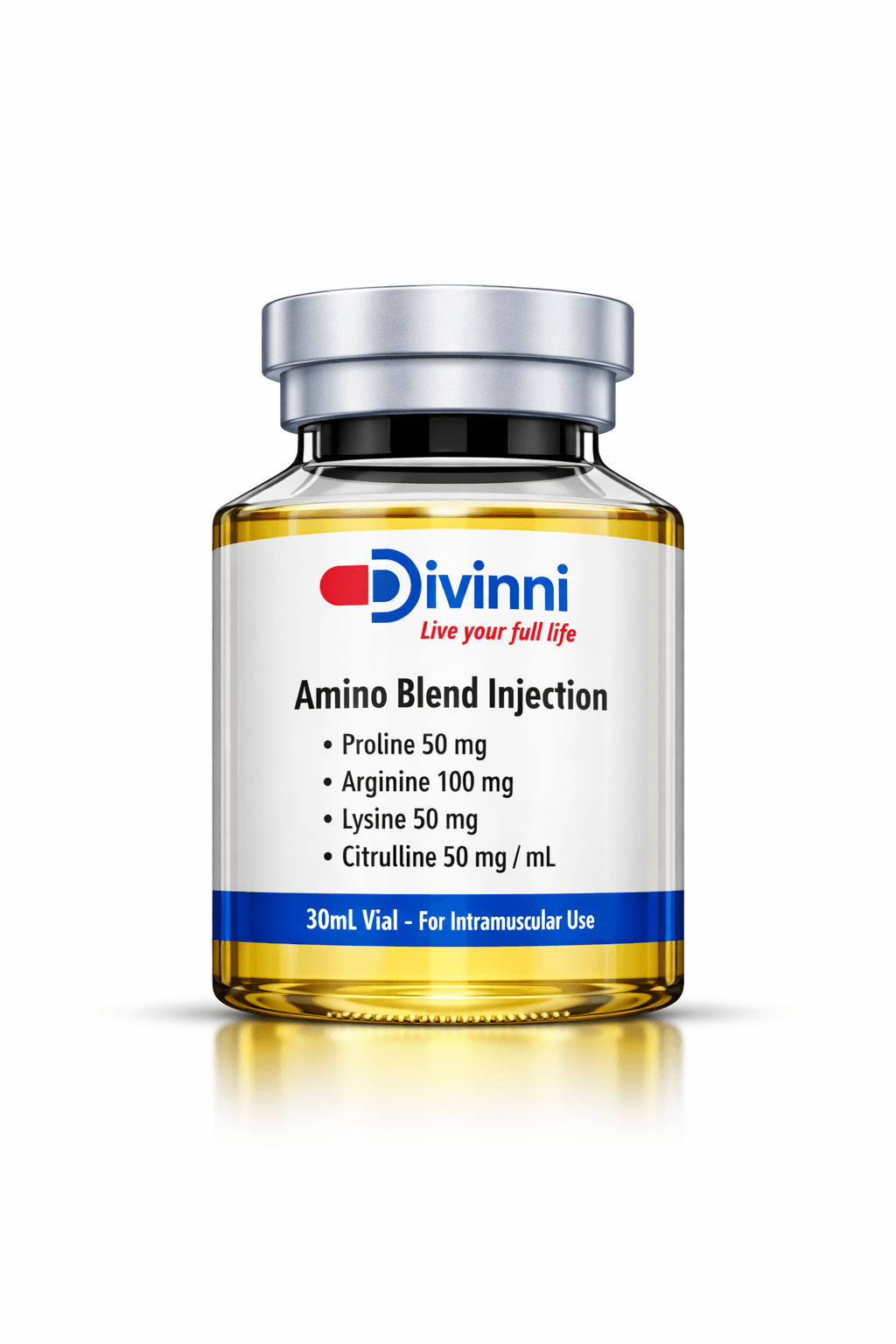
Amino Blend is a proprietary synergistic formulation that combines four amino acids selected for their complementary roles in metabolism, circulation, tissue repair, and physical performance. Unlike single-agent amino acid supplements, this blend leverages the physiological interactions between these compounds .
As a compounded preparation, dosing must be determined by a licensed physician. The water-soluble nature of amino acids generally results in a favorable safety profile when used as directed. However, patients with renal or hepatic impairment should exercise particular caution, as amino acid metabolism places demands on these organs .
Scientific Background
Amino Blend is a proprietary synergistic formulation that combines four amino acids selected for their complementary roles in metabolism, circulation, tissue repair, and physical performance. Unlike single-agent amino acid supplements, this blend leverages the physiological interactions between these compounds .
- Amino acids are categorized into three groups: essential (cannot be produced by the body, must come from diet), nonessential (produced within the body), and conditional (usually produced but become essential during stress, illness, or injury). This formulation addresses both essential and conditional amino acid needs .
- Arginine (100mg/ml): As discussed in Article 1, arginine is the precursor to nitric oxide, which relaxes blood vessels and increases blood flow. In this blend, arginine serves as the primary driver of circulation enhancement and growth hormone stimulation .
- Citrulline (50mg/ml): Citrulline is a non-essential amino acid that plays a unique role in the urea cycle, helping to clear ammonia from the body. More relevant to athletic performance, citrulline is converted into arginine in the kidneys, effectively recycling and amplifying the body's arginine availability. This recycling pathway means citrulline can increase plasma arginine levels more effectively than arginine supplementation alone .
- Lysine (50mg/ml): As an essential amino acid, lysine supports protein synthesis, activates muscle repair cells, and serves as a precursor to carnitine for fatty acid metabolism. It also contributes to calcium absorption and collagen formation .
- Proline (50mg/ml): Proline is a non-essential amino acid that is a major component of collagen, comprising approximately 15% of collagen's amino acid content. It is critical for joint health, tissue repair, and maintaining the structural integrity of connective tissues. Proline also supports tendon and ligament health, making it particularly valuable for individuals engaged in regular physical activity .
Mechanism of Synergy
- The four components of Amino Blend work through interconnected pathways:
- Nitric Oxide Cycle Enhancement: Arginine provides direct substrate for NOS enzymes. Citrulline is converted back to arginine in the kidneys, creating a recycling loop that sustains elevated arginine levels longer than arginine alone could achieve. This dual approach maximizes nitric oxide production for sustained vasodilation .
- Tissue Support Integration: While arginine and citrulline focus on circulation, lysine and proline focus on the structural components of tissues—protein synthesis, collagen formation, and connective tissue integrity. This combination addresses both delivery (blood flow) and utilization (tissue building) of nutrients .
- Recovery Optimization: Exercise creates two primary needs: increased blood flow to working muscles (arginine/citrulline) and raw materials for muscle repair and growth (lysine/proline). The blend addresses both simultaneously .
Primary Uses and Indications
- Post-Weight-Loss Wellness: Amino Blend is specifically positioned for individuals who have achieved weight loss goals and need support maintaining metabolic balance, energy levels, and physical performance. Weight loss, particularly rapid loss, can deplete amino acid reserves; replenishment supports the body's transition to weight maintenance .
- Exercise Performance and Endurance: The blend may enhance metabolic function, improve endurance, and support fat burning during physical activity. The nitric oxide precursors improve oxygen delivery to working muscles, while the structural amino acids support recovery .
- Muscle Recovery and Physical Resilience: By providing the building blocks for protein synthesis and collagen formation, the blend supports post-exercise muscle repair and reduces recovery time .
- Metabolic Support: Amino acid supplementation may address common symptoms of deficiency, including fatigue, weight gain, and disrupted sleep cycles .
Health, Wellness, and Longevity Effects
- Metabolic Function Enhancement: Adequate amino acid availability is essential for maintaining metabolic rate. Deficiency can lead to reduced energy expenditure and fat accumulation. By ensuring optimal amino acid levels, the blend supports the body's natural metabolic processes .
- Endurance and Fat Utilization: The combination of arginine and citrulline supports fat oxidation during exercise by improving blood flow to adipose tissue and increasing the availability of fatty acids for energy production .
- Joint and Connective Tissue Health: Proline's role in collagen synthesis has direct implications for joint health—a key determinant of mobility and quality of life in aging populations. Preserving joint function allows continued physical activity, which is itself a major predictor of longevity .
- Muscle Mass Preservation: Sarcopenia (age-related muscle loss) begins as early as age 30 and accelerates after 60. By supporting protein synthesis through adequate lysine and other amino acids, Amino Blend may help preserve lean muscle mass, which is associated with reduced fall risk, better metabolic health, and increased lifespan .
Safety and Considerations
As a compounded preparation, dosing must be determined by a licensed physician. The water-soluble nature of amino acids generally results in a favorable safety profile when used as directed. However, patients with renal or hepatic impairment should exercise particular caution, as amino acid metabolism places demands on these organs .
Specific contraindications for individual components apply (see Articles 1 and 2 for arginine and lysine precautions). The presence of citrulline and proline adds no unique safety concerns, as these are generally well-tolerated.